Open source — Production — Quant

I build systems other engineers keep using.

Full-stack engineer from Agra. A documentation CLI with ~5,000 installs, production ERP and legal-AI work in React and TypeScript, and a quantitative trading pipeline where being wrong costs money. Three kinds of pressure, one way of working.

PyPI installs
5,000+
Public repositories
60+
Hours mentoring
500+
Production roles
5
IOpen source01/03

Tools that outlived the reason I wrote them.

The honest test of a developer tool is whether strangers keep it installed. devDocs reads an entire codebase and writes the documentation nobody gets around to — recursively indexed, LLM-assisted, shipped to PyPI. Engineers I have never met use it to onboard.

Read the source

Python · LLM integration · CLI design · PyPI · Recursive indexing

IIProduction engineering02/03

Then the same instinct, with someone else’s revenue attached.

Open source teaches you to build. Production teaches you what holds. Selected from 1,000+ applicants, then handed the client onboarding module of a live ERP — plus a component library that other teams now build against, which is the part that compounds.

See the record

TypeScript · React · Next.js · NestJS · AdonisJS · Redux · PostgreSQL · Redis

IIIQuantitative systems03/03

Now: pipelines where being wrong costs money.

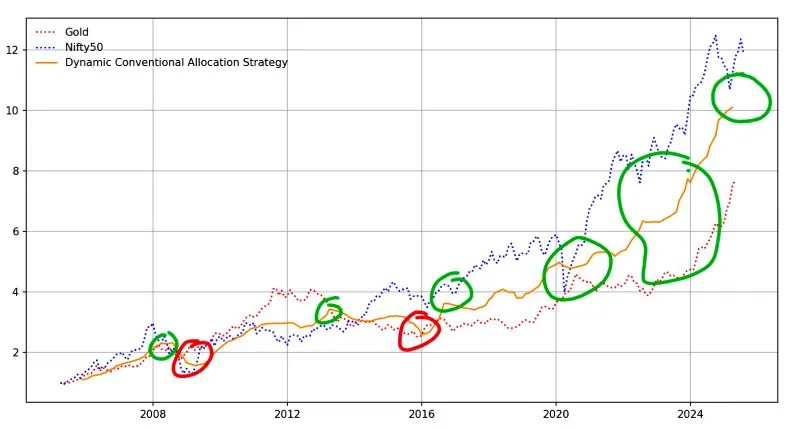
A web bug ships a hotfix. A bad fill takes capital. Trade It Up runs the full loop — signals out of TradingView, backtests in Python against NSE data, live execution through the Zerodha API over WebSockets, with real position sizing and risk controls. Paper trading teaches you nothing about loss.

Start the conversation

Python · WebSockets · Zerodha API · NSE · Backtesting · Risk modelling

The ask

Three proofs are on this page. The next one should have your name on it.

I am most useful where the problem is not yet well-specified — architecture that has to hold, tooling other engineers will actually adopt, systems whose correctness is measurable. If that is the shape of what you are building, the fastest next step is a single email.